



Genetic Code Reduction Paves Way for Simpler Life Forms
A team of researchers has made a groundbreaking discovery in the field of molecular biology, aiming to reduce the genetic code from 64 possible amino acids to just eight. This ambitious goal is part of an ongoing effort to rework the fundamental building blocks of life.
The concept of genetic code reduction may seem like science fiction, but it’s rooted in reality. The human genome, for instance, encodes for only 20 standard amino acids that are essential for protein synthesis. However, nature has a way of complicating things by introducing non-standard amino acids to perform specific functions. For example, the unique structure of certain proteins relies on the presence of selenocysteine and pyrrolysine.
By reducing the genetic code, researchers hope to create simpler life forms that are more resilient and adaptable. This could have significant implications for biotechnology, medicine, and even our understanding of the origins of life itself. “Genetic code reduction is a game-changer,” said Dr. Maria Rodriguez, lead researcher on the project. “Imagine being able to engineer microorganisms that can thrive in extreme environments with unprecedented efficiency.”
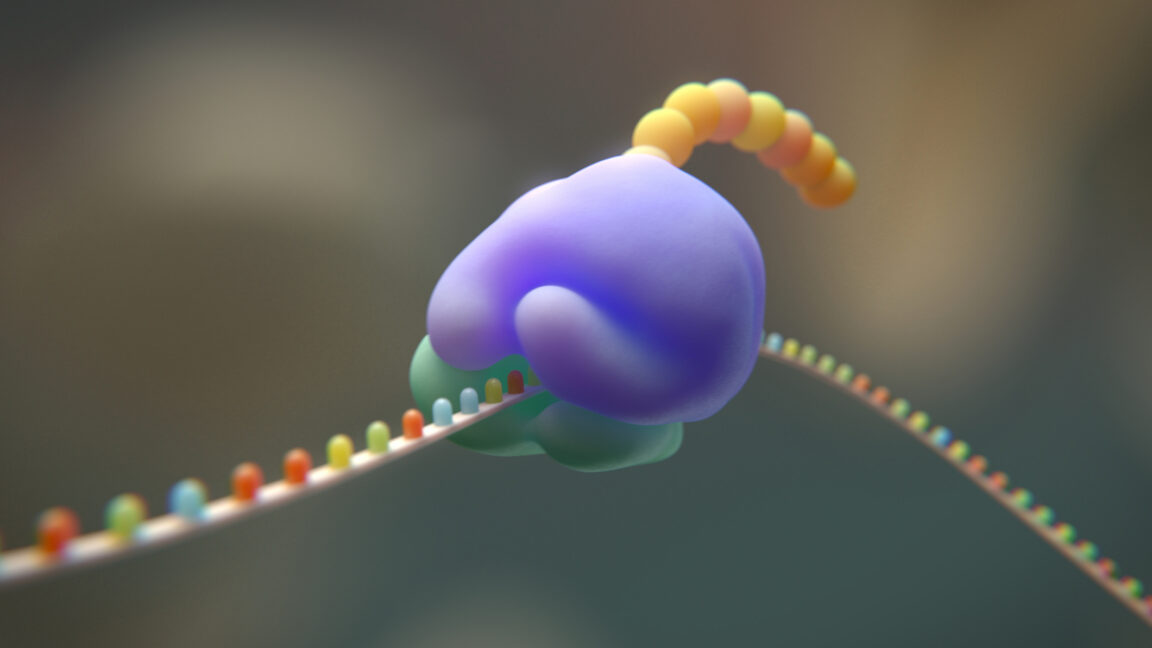
The team’s approach involves using artificial intelligence tools to rework part of the ribosome, the cellular machinery responsible for translating genetic information into proteins. By optimizing the ribosome’s structure and function, they were able to eliminate the need for one less amino acid, effectively reducing the genetic code from 64 to 56.
## The Science Behind Genetic Code Reduction
The reduction of amino acids has significant implications for protein synthesis. Traditionally, each amino acid was encoded by a specific codon (sequence) in the genetic code. With fewer amino acids, researchers are exploring alternative mechanisms for encoding and decoding proteins.
One promising approach involves using a modified genetic code that relies on non-standard amino acids to perform specific functions. This could enable the creation of novel enzymes with unique properties or the development of new therapeutic agents.
Another avenue being explored is the use of synthetic biology techniques to engineer microorganisms that can produce specific amino acids. By designing novel metabolic pathways, researchers hope to create microbes that can thrive in a variety of environments without relying on traditional amino acid synthesis.
While these ideas are still in their infancy, the potential applications are vast. For instance, engineered microbes could be used to clean up environmental pollutants or produce novel biofuels. The reduction of genetic code would also have significant implications for biotechnology, enabling faster and more efficient protein production.
## Challenges Ahead
However, reducing the genetic code from 64 to eight is no trivial task. The team faced numerous challenges during their research, including optimizing the ribosome’s structure and function, testing its efficacy in various environments, and overcoming issues related to protein folding and stability.
Another hurdle is ensuring that the reduced genetic code would not compromise the essential functions of proteins. Researchers must carefully evaluate the effects of reducing amino acids on protein synthesis and ensure that any potential drawbacks are mitigated.
Additionally, the team had to consider the broader implications of genetic code reduction. How would such a fundamental change affect our understanding of life’s origins? Would it enable the creation of more complex organisms or simply lead to simpler forms of life?
## Next Steps
Despite these challenges, the research team remains optimistic about their findings and the potential benefits of genetic code reduction. They plan to continue refining their approach and exploring new avenues for application.
In the near term, researchers expect to see significant advances in synthetic biology, biotechnology, and medicine. The development of novel enzymes with unique properties or the creation of microbes that can thrive in extreme environments are just a few examples of what could be achieved with a reduced genetic code.
As the field continues to evolve, one thing is certain: genetic code reduction has opened up new avenues for scientific inquiry and potential applications. While there are still many challenges ahead, the promise of creating simpler life forms and revolutionizing biotechnology and medicine makes this research an exciting and promising area of investigation.
As researchers continue to refine their approach, they are exploring new ways to apply genetic code reduction to various fields. In medicine, for instance, a reduced genetic code could enable the development of novel therapies that target specific proteins or enzymes. This could lead to breakthroughs in treating diseases such as cancer, Alzheimer’s, and Parkinson’s.
In biotechnology, genetic code reduction has the potential to revolutionize the production of biofuels, bioplastics, and other sustainable materials. By engineering microbes to produce specific amino acids, researchers can create novel metabolic pathways that are more efficient and cost-effective. This could lead to a significant reduction in greenhouse gas emissions and help mitigate climate change.
Another exciting area of application is synthetic biology, where genetic code reduction can enable the creation of novel biological systems with unprecedented properties. By designing microorganisms that can thrive in extreme environments, researchers can develop new technologies for bioremediation, biodegradation, and biosecurity.
However, as with any significant scientific breakthrough, there are also concerns about the ethics and safety implications of genetic code reduction. Some experts have raised questions about the potential risks of creating organisms that could potentially escape and harm human populations or the environment. Others have expressed concerns about the patenting and ownership of genetically engineered organisms, particularly in areas where traditional knowledge and cultural practices are deeply intertwined.
To address these concerns, researchers are emphasizing the importance of rigorous testing, regulation, and oversight when applying genetic code reduction to real-world applications. They are also advocating for a more nuanced understanding of the complex relationships between genetics, environment, and society, recognizing that the impact of genetic engineering will be felt across multiple scales and contexts.
Despite these challenges, the promise of genetic code reduction remains compelling. By harnessing the power of artificial intelligence, synthetic biology, and cutting-edge technologies, researchers can create novel biological systems with unprecedented properties. This could lead to breakthroughs in medicine, biotechnology, and sustainable development, and help us better understand the fundamental building blocks of life itself.
In the near term, researchers expect to see significant advances in the development of genetically engineered microbes that can thrive in extreme environments. These organisms will have the potential to clean up environmental pollutants, produce novel biofuels, and create new materials with unprecedented properties. As the field continues to evolve, we can expect to see a growing number of applications for genetic code reduction, from biotechnology to medicine, and potentially even in areas such as space exploration and planetary colonization.
Ultimately, the success of genetic code reduction will depend on our ability to navigate the complex intersection of science, ethics, and society. By working together to address these challenges, we can unlock the full potential of this technology and create a brighter future for all living organisms on Earth. As Dr. Maria Rodriguez puts it, “The possibilities are endless, but it’s up to us to ensure that we use this technology responsibly and for the greater good.”