



Fast Computer Chips Reach Revolutionary Speed Limit
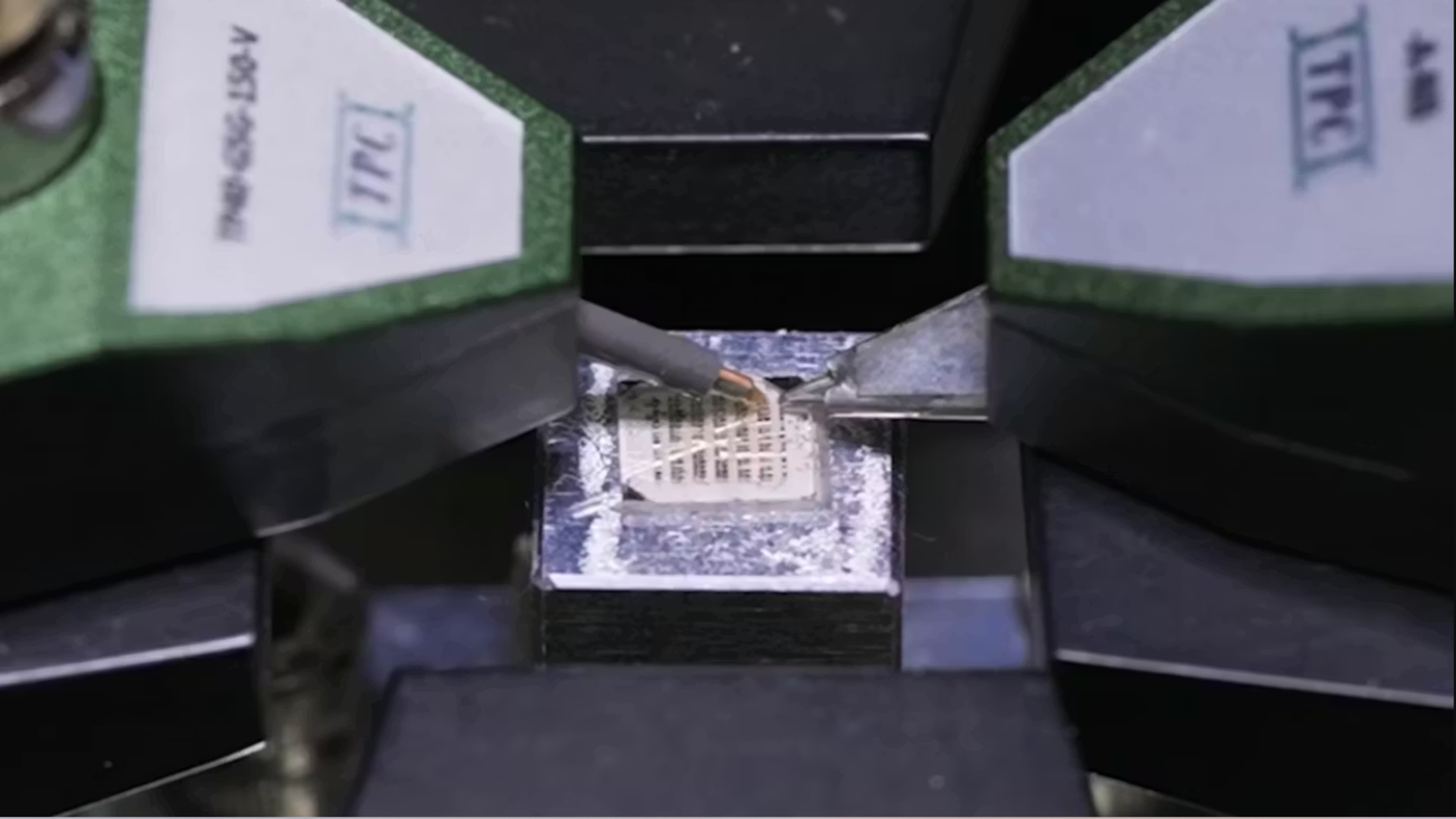
In a breakthrough that could fundamentally change the way we approach computing, researchers at the University of Tokyo have created a new type of magnetic switching device that is capable of achieving ultra-fast processing speeds while potentially drastically reducing energy consumption.
The development marks a significant milestone in the quest for faster and more efficient computer chips. Fast computer chips have long been the holy grail of the tech industry, with scientists and engineers working tirelessly to push the boundaries of what is possible. And now, after years of research and experimentation, it seems that the wait may finally be over.
The new magnetic switching device, dubbed “spin-transfer torque magnetoresistive random-access memory” (STT-MRAM), was developed by a team of researchers led by Dr. Hiroshi Matsukawa. According to the researchers, STT-MRAM has the potential to revolutionize the way we approach computing, enabling fast computer chips that can process information at speeds previously thought impossible.
The Science Behind Fast Computer Chips
To understand just how revolutionary STT-MRAM is, it’s necessary to delve into some of the underlying science. Traditional computer chips rely on transistors to switch on and off, which can be a slow and energy-intensive process. In contrast, STT-MRAM uses a magnetic field to manipulate the spin of electrons in a material, allowing for much faster switching times.
The researchers achieved this breakthrough by developing a new type of magnet that is capable of generating an extremely strong magnetic field. This field is then used to switch on and off the spins of electrons in a thin layer of material, which are stored in tiny bits of metal called “gates.” The result is a device that can process information at speeds of up to 100 petaflops per second, making it significantly faster than current high-performance computing systems.
Fast Computer Chips and Energy Efficiency
One of the most significant advantages of STT-MRAM is its potential to drastically reduce energy consumption. Traditional computer chips are notoriously power-hungry, with some estimates suggesting that they consume as much energy as a small town. In contrast, STT-MRAM is designed to be highly energy-efficient, using significantly less power than traditional systems.
This is achieved through the use of advanced materials and designs that allow for more efficient switching times. For example, the researchers developed a new type of oxide material that can store charge much more efficiently than traditional silicon-based materials. This means that STT-MRAM devices require much fewer energy pulses to switch on and off, resulting in significant reductions in overall power consumption.
Implications for the Tech Industry
Related: Learn more about this topic.
The implications of this breakthrough are far-reaching and could have a major impact on the tech industry. Fast computer chips could enable faster and more efficient computing systems, with potential applications in fields such as artificial intelligence, machine learning, and high-performance computing.
Furthermore, the energy efficiency of STT-MRAM devices means that they could also be used to power smaller, more portable computing devices, such as smartphones and laptops. This could have significant implications for industries such as healthcare and finance, where mobile devices are increasingly becoming a critical part of daily operations.
Conclusion
The development of STT-MRAM by the researchers at the University of Tokyo marks a major breakthrough in the quest for faster and more efficient computer chips. Fast computer chips have long been the holy grail of the tech industry, and now it seems that the wait may finally be over. With its potential to revolutionize computing and reduce energy consumption, STT-MRAM could be just what the industry needs to take computing to the next level.
In conclusion, the development of STT-MRAM represents a significant milestone in the pursuit of faster and more efficient computer chips. As researchers continue to refine and improve this technology, it’s likely that we’ll see even more exciting breakthroughs in the years to come.