


Amazon Labor Deal Impasse Sets Back Union Progress
Amazon’s failure to recognize the union representing its warehouse workers has far-reaching implications for labor law and worker rights in the United States.
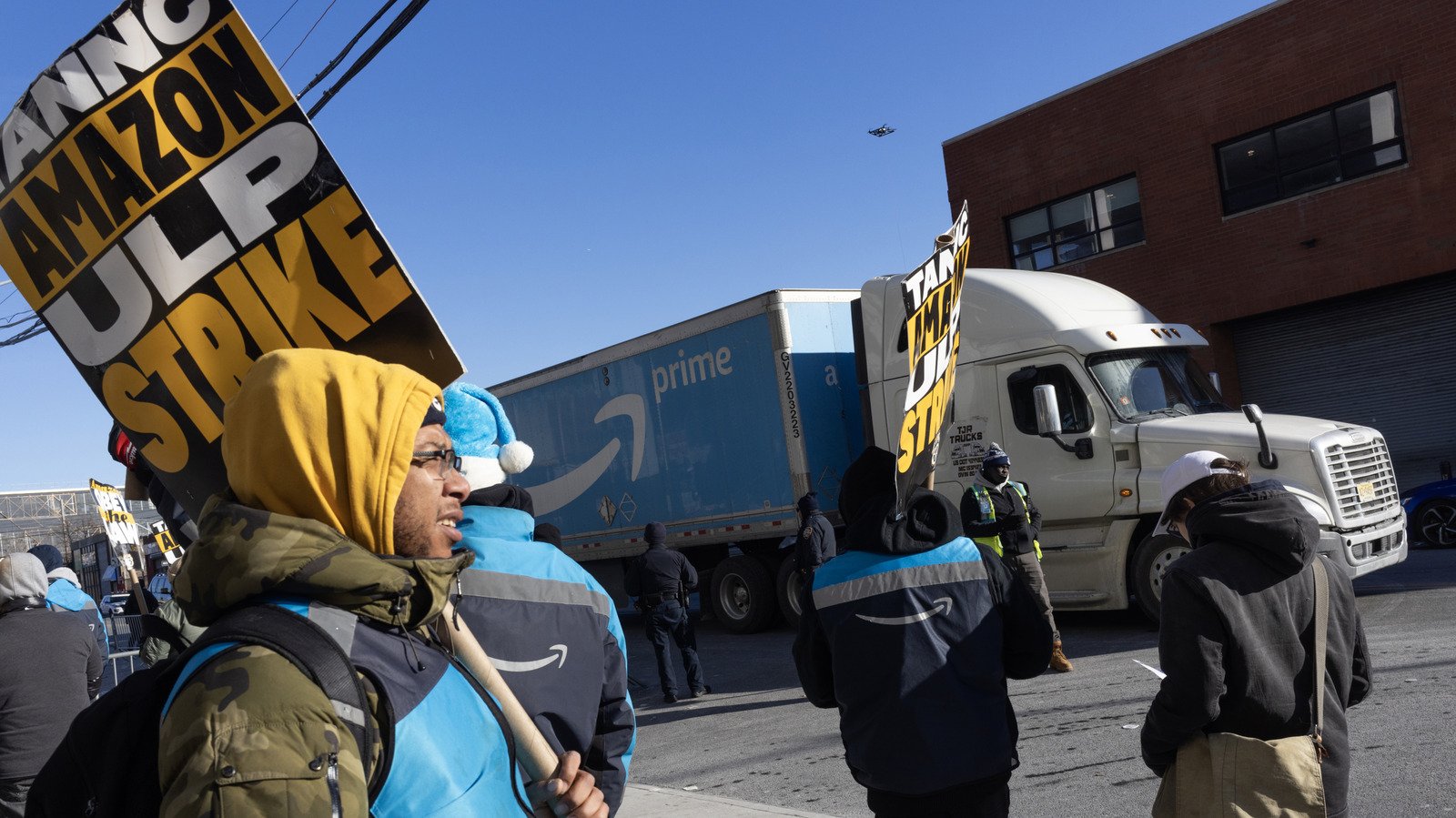
A federal judge ruled that Amazon violated federal law when it refused to recognize a union, dealt a significant blow to the labor movement’s efforts to organize workers at the tech giant. The ruling marked a major victory for the National Labor Relations Board (NLRB), which has been working to protect workers’ right to form and join unions.
The NLRB’s decision is a significant development in the ongoing struggle between Amazon and its warehouse workers, who have been pushing for better wages, benefits, and working conditions. The union, known as the National Union of Healthcare Workers (NUHW), represents over 1,500 Amazon workers across the United States.
Amazon Labor Deal: A Violation of Federal Law
The NLRB’s ruling is a clear example of how the federal government is failing to enforce its laws protecting workers’ rights. By refusing to recognize the union, Amazon was essentially asking the court to override its own employees’ right to form and join a labor organization.
This kind of behavior has been on display at Amazon for years, as the company has consistently sought to undermine worker organizing efforts. The NLRB’s decision sends a clear message that such tactics will not be tolerated in the future.
The Impact on Worker Organizing
The Amazon labor deal impasse is not an isolated incident; it is part of a larger trend of corporate resistance to worker organizing. In recent years, companies like Google, Facebook, and Uber have also resisted unionization efforts by their employees.
The impact of this trend is far-reaching. As more workers become disillusioned with the lack of job security, benefits, and fair compensation, they are increasingly turning to unions for protection and support. The Amazon labor deal impasse has dealt a significant blow to these efforts, but it also highlights the need for greater protections and enforcement mechanisms.
A Lack of Regulation
One of the main reasons why Amazon was able to get away with its anti-union tactics is because there is currently a lack of regulation on the issue. The NLRB has been criticized for being too lenient in enforcing federal labor laws, particularly when it comes to large corporations like Amazon.
The agency’s decision to allow Amazon to avoid recognizing the union is a clear example of this problem. By failing to enforce its own rules and regulations, the NLRB has effectively given companies like Amazon a free pass to undermine worker organizing efforts.
Related: Learn more about this topic.
This lack of regulation is not unique to the NLRB; it is also a broader issue within the federal government. The current administration’s policies on labor law have been criticized for being overly favorable to corporations and less protective of workers’ rights.
A Call for Action
The Amazon labor deal impasse is a wake-up call for policymakers, labor leaders, and workers themselves. It highlights the need for greater protections and enforcement mechanisms to ensure that workers’ rights are respected and protected.
This can be achieved through several means. One option is to strengthen federal labor laws and regulations, particularly when it comes to large corporations like Amazon. Another approach is to increase funding for the NLRB and give the agency more authority to enforce its rules and regulations.
Ultimately, the goal should be to create a level playing field where workers have an equal say in the workplace and are able to organize and negotiate for their rights without fear of retaliation or reprisal. The Amazon labor deal impasse is a step back in this process, but it also serves as a reminder that there is still much work to be done to ensure that workers’ rights are respected and protected in the United States.