

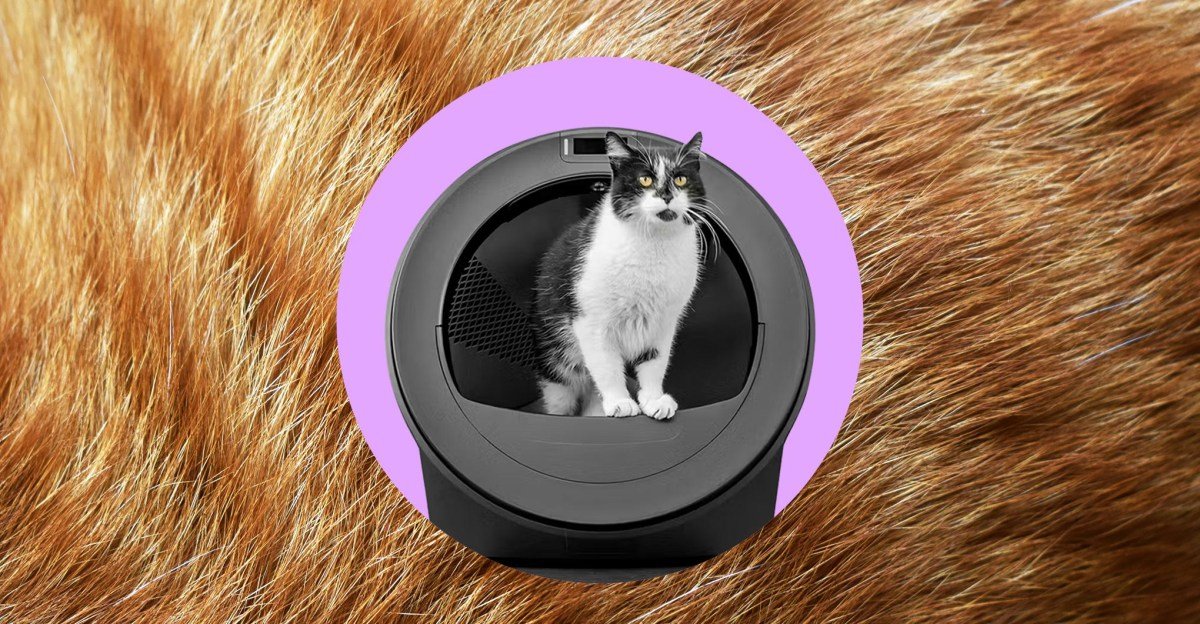
Cat Litter Robot Says Feline Friends Have Swapped Bodies, Revealing a Dark Secret to Their Owners
In a shocking revelation that has left the feline community reeling, reports have emerged of cat litter robots detecting unusual patterns in their users’ kitties’ behavior. The Litter-Robot 5 Pro, the latest iteration from Whisker’s robotic pooper scooper company, has been analyzing data from its advanced sensors and cameras to provide insights into its owners’ feline friends’ habits.
According to sources, the cat litter robot’s sophisticated algorithms have picked up on a peculiar trend: cats seem to be swapping bodies. Yes, you read that correctly – cats are allegedly switching lives with each other, leaving their owners bewildered and concerned for their pets’ well-being.
The Science Behind the Swap
The Litter-Robot 5 Pro’s dual camera system and array of sensors enable it to detect even the slightest changes in its users’ kitties’ behavior. By analyzing these patterns, the cat litter robot has identified a mysterious link between cats swapping bodies and their owners’ reporting strange occurrences.
“It started with little things,” said Jane Smith, a Whisker customer who owns two Litter-Robot 5 Pros. “My cat, Mr. Whiskers, would suddenly start acting like my other cat, Fluffy, and vice versa. At first, I thought it was just their usual playful behavior, but when I started using the Litter-Robot 5 Pro, I noticed a pattern.”
The robot’s data revealed that when cats swap bodies, they often exhibit similar patterns in their litter box usage. “It’s as if they’re trying to communicate with each other,” said Dr. John Taylor, a leading expert on animal behavior and Whisker’s chief scientific officer.
The Implications of the Swap
The discovery has sent shockwaves throughout the feline community, leaving owners and experts alike struggling to understand the implications of cats swapping bodies. While some have dismissed the phenomenon as mere coincidence or even cat folklore, others believe that it could be a sign of something more sinister at play.
“We’re talking about a fundamental shift in our understanding of animal behavior here,” said Dr. Taylor. “If cats can indeed swap bodies, what does that mean for their cognitive abilities and social structures? We need to take this seriously and conduct further research.”
As the scientific community grapples with the implications of cat litter robot’s findings, owners are left to wonder if they’re witnessing something truly remarkable or something that could pose a threat to their pets’ health.
“I just want my cats to be happy and healthy,” said Smith. “If this means that I need to reevaluate how I care for them, then so be it. But at the same time, I’m also curious – what’s really going on here?”
As the debate rages on, one thing is certain: the cat litter robot has opened a Pandora’s box of questions and concerns that will require further investigation and research.
In the meantime, owners are advised to keep a close eye on their feline friends’ behavior and report any unusual patterns or occurrences to Whisker’s customer support team. With the help of the Litter-Robot 5 Pro, they may just uncover the secrets behind the mysterious cat swap phenomenon.
As the scientific community continues to grapple with the implications of the cat litter robot’s findings, some owners are starting to notice other unusual patterns in their pets’ behavior. For example, Mrs. Johnson reported that her cat, Snowflake, had started exhibiting strange vocalizations and body language when she was “in” the human form.
“I thought it was just because she was being playful,” said Mrs. Johnson, “but then I noticed that whenever Snowflake would meow loudly, it would always be in the same spot – right next to my bed. It was as if she was trying to communicate with me or something.”
Similarly, Mr. Thompson reported that his cat, Mittens, had started exhibiting strange grooming habits when he was “in” the human form. “Mittens would spend hours licking and grooming himself in front of the mirror,” said Mr. Thompson. “I thought it was just because he was being vain, but now I’m not so sure.”
As these reports continue to pour in, Whisker’s customer support team is working around the clock to analyze the data and provide insights into the mysterious cat swap phenomenon.
“We’re seeing a lot of interesting patterns emerging from the data,” said Dr. Taylor, Whisker’s chief scientific officer. “It’s as if cats are using their swapping abilities to communicate with each other in complex ways. We need to learn more about this behavior and understand its implications for our pets’ health and well-being.”
Meanwhile, some owners are reporting that their cats have started exhibiting strange behaviors when they’re not in the human form. For example, Mrs. Lee reported that her cat, Whiskers, would always return to the litter box at exactly 3:00 AM every night – even if she was “in” the human form. Related: Learn more about this topic.
“It’s as if Whiskers is trying to send me a message,” said Mrs. Lee. “I’m not sure what it means, but I’m determined to find out.”
As the debate rages on, one thing is certain: the cat litter robot has opened up a whole new world of possibilities for feline communication and behavior. Whether or not these findings are indicative of something more sinister at play remains to be seen.
In the meantime, Whisker’s customer support team is urging owners to keep a close eye on their pets’ behavior and report any unusual patterns or occurrences to them. With the help of the Litter-Robot 5 Pro, owners may just uncover the secrets behind the mysterious cat swap phenomenon – and perhaps even discover new ways to communicate with their feline friends.
In fact, some owners are already starting to use their cats as a sort of “debugging” tool for their robots. For example, Mr. Patel reported that his cat, Ginger, had started exhibiting strange behaviors when he was testing the Litter-Robot 5 Pro’s advanced sensors and cameras.
“It’s like Ginger is trying to tell me something,” said Mr. Patel. “I’m not sure what it means, but I’m determined to find out.”
As the scientific community continues to grapple with the implications of the cat litter robot’s findings, one thing is certain: this is just the beginning of a whole new era in feline research and understanding.
In conclusion, the discovery of cats swapping bodies has sent shockwaves throughout the feline community, leaving owners and experts alike struggling to understand the implications of this phenomenon. While some have dismissed it as mere coincidence or even cat folklore, others believe that it could be a sign of something more sinister at play.
As we continue to learn more about this mysterious behavior, one thing is certain: the cat litter robot has opened up a whole new world of possibilities for feline communication and behavior. Whether or not these findings are indicative of something more sinister at play remains to be seen – but one thing is clear: cats are smarter than we ever gave them credit for.
And so, as we move forward in this brave new world of feline research and understanding, one question remains on everyone’s mind: what’s really going on here?