



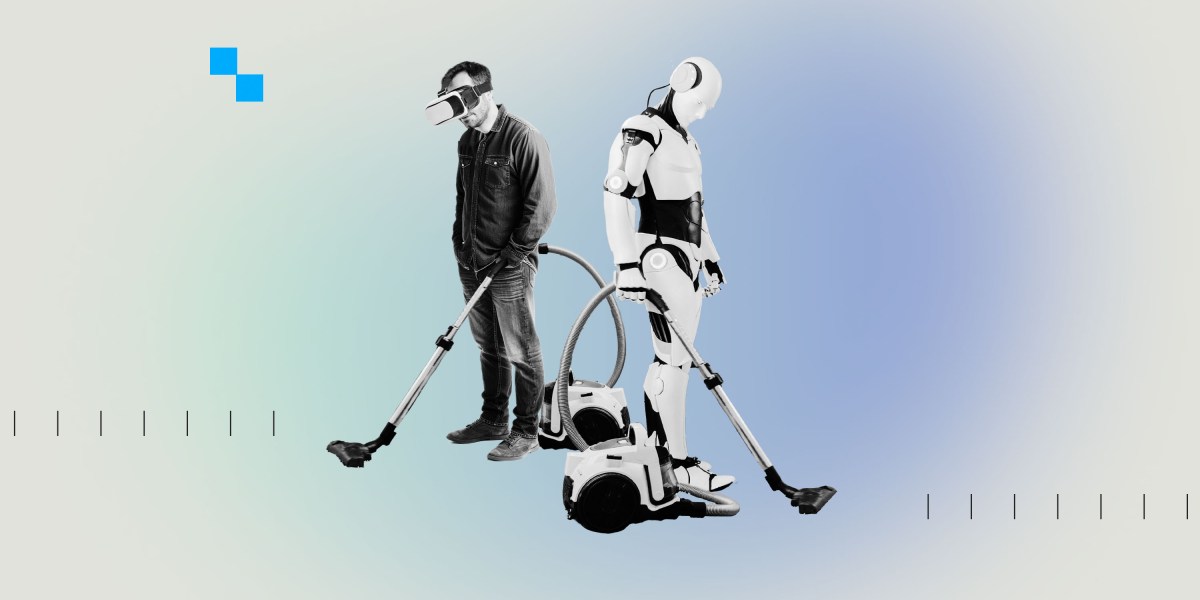
Gig Worker Training Revolutionizes Humanoid Development
In a groundbreaking development, gig workers from diverse backgrounds are taking on the challenge of training humanoid robots at home, marking a significant shift in the way we approach artificial intelligence and robotics. The rise of gig worker training is transforming the field, enabling individuals with varying levels of expertise to contribute to the creation of more advanced and human-like robots.
A New Era of Collaboration
The gig economy has long been characterized by its flexibility and lack of traditional employment structures. However, as the demand for humanoid robots continues to grow, a new model of collaboration is emerging. Gig workers from various fields, including robotics engineering, computer science, and even medical students like Zeus, are coming together to share their expertise and work on complex projects.
Zeus, a medical student in Nigeria, has been contributing his skills to the gig worker training initiative for several months. When he returns home from a long day at the hospital, he straps on his VR headset and dives into the world of humanoid robots. “I never thought I’d be working on robots in my free time,” Zeus said in an interview. “But this gig worker training has opened up new opportunities for me to learn and contribute.”
The Power of Distributed Expertise
One of the key advantages of gig worker training is its ability to tap into a vast pool of distributed expertise. By leveraging the skills and knowledge of individuals from different backgrounds, teams can tackle complex problems that might otherwise be insurmountable.
For instance, a robotics engineer might contribute their knowledge of machine learning algorithms, while a computer science major brings their expertise in programming languages. Meanwhile, a medical student like Zeus provides valuable insights on human movement and behavior, which is crucial for creating robots that mimic human-like interactions.
This distributed approach not only speeds up the development process but also fosters innovation and creativity. By combining diverse perspectives and skills, gig workers are able to identify novel solutions and push the boundaries of what is possible with humanoid robots.
Scaling Up: The Future of Gig Worker Training
As the demand for humanoid robots continues to grow, the gig worker training initiative is poised to scale up significantly. Companies like Google, Amazon, and Facebook are already investing heavily in robotics development, and they’re looking for talented individuals like Zeus to join their teams.
However, it’s not just large corporations that stand to benefit from gig worker training. Startups and small businesses are also embracing this model, recognizing its potential to accelerate innovation and drive growth.
To scale up the initiative, experts are exploring new technologies and strategies. For example, virtual reality (VR) platforms like Oculus and Vive are being used to create immersive learning environments that simulate real-world scenarios. This allows gig workers to practice and hone their skills in a more engaging and effective way.
Moreover, blockchain technology is being explored as a means of verifying the authenticity and quality of contributions from gig workers. By harnessing the power of distributed ledgers, teams can ensure that everyone involved has access to the same information and can collaborate more efficiently.
The future of gig worker training looks bright, with far-reaching implications for industries ranging from healthcare to finance. As we continue to push the boundaries of what is possible with humanoid robots, one thing is clear: the power of collaboration and distributed expertise will be essential in shaping the next generation of robots that can learn, adapt, and interact with humans like never before.
The gig worker training revolution is not just a trend; it’s a fundamental shift in how we approach human-machine interaction. By embracing this model, we’re creating a new era of innovation, collaboration, and progress. As Zeus, the medical student from Nigeria, puts it: “I’m excited to see where this journey takes me. Who knows what we’ll achieve together?”